
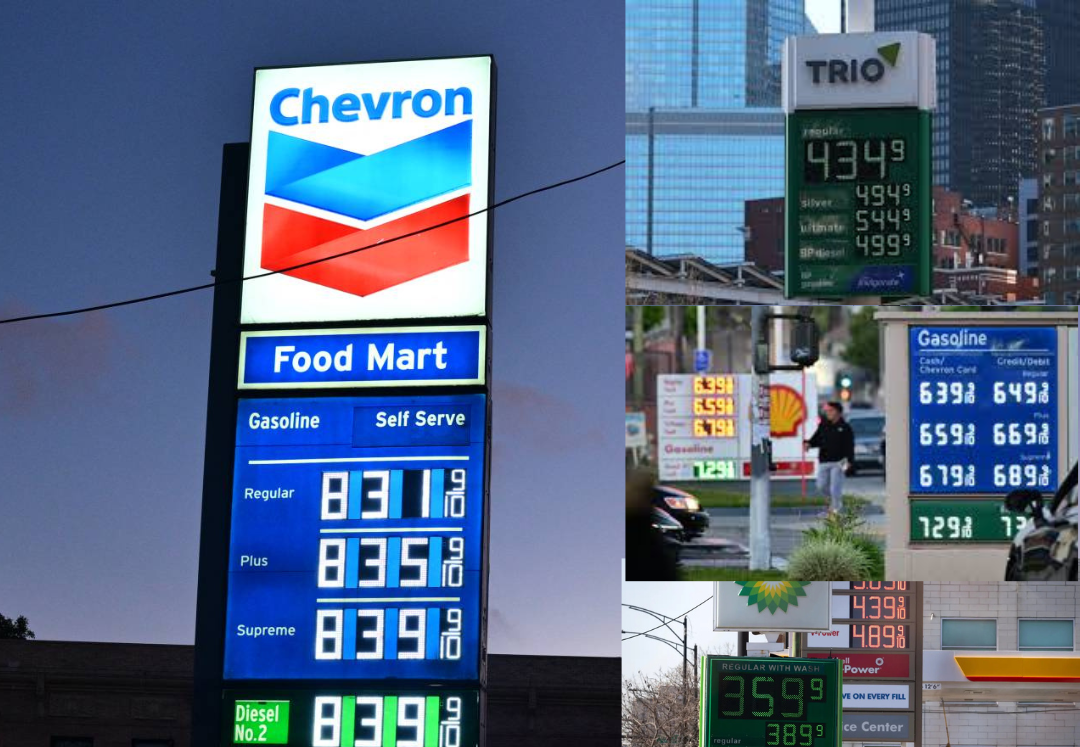
According to npr.org, gas prices are rising rapidly, reaching over $4.40 per gallon nationally, primarily due to massive oil supply fears stemming from the Iran war and the closure of the Strait of Hormuz, a key oil trade route. This, combined with high global crude oil prices, increasing demand, and geopolitical instability, has driven costs upward.
Geopolitical Conflict and Supply Fears: The ongoing war involving Iran has caused the largest oil supply disruption in history, causing oil prices to rise sharply after the closure of the Strait of Hormuz.
Rapidly Rising Oil Prices: Crude oil makes up over 50% of the cost of gasoline. When the price of a barrel of oil rises, gasoline prices follow almost immediately.”Rocket” Pricing Reaction: Retail gas stations often raise prices in a “rocket” fashion—sharply and quickly—when oil costs surge, aiming to cover their rapidly increasing replacement costs.
Global Demand & Low Supply: Despite high U.S. production, the market is constrained by high demand and low inventory, with fears that the conflict could lead to more severe shortages.
Everyone is complaining about the prices going up, and this is what I found out, according to nerdwallet.com: The average regular gas price in the U.S. as of May 4 is $4.457 per gallon, according to AAA. One week ago: $4.111. One month ago: $4.104. One year ago: $3.165.
Gas prices have hit their highest level in four years, according to AAA, as shipping disruptions continue in the Strait of Hormuz. Oil prices have been rising again in the past two weeks as a durable end to the Iran War proves elusive. A ceasefire began on April 8 and has been extended indefinitely, but on-again, off-again negotiations have not yet yielded a breakthrough.
All shipping movement through the Strait of Hormuz is closed for now. On May 4, the U.S. said it would try to help stranded ships move through the area, but provided few details. Iran responded with threats against U.S. forces and commercial ships trying to pass. After reaching nearly $110 in the weeks after the war began, prices eased back down into the $90 range in early April as the White House signalled progress in talks to end the fighting and reopen the Strait of Hormuz.
But as talks have broken down, crude is once again trading above $113 per barrel as of this update. Gas prices are expected to rise as oil spikes. On Feb. 28, the first day of the U.S.-Israeli attacks on Iran, the average was just under $3. Since the U.S. and Israel launched strikes on Iran on Feb. 28, the widening conflict has roiled global energy markets, shaken investor confidence and pushed average gas prices up to their highest levels in four years.
Brent crude — the global benchmark — has moved sharply up and down with each new twist in the war, generally trading around $95 but spiking well above $100 per barrel at times. It traded below $70 as recently as mid-February and was below $80 when the conflict began. It marked the first time oil has traded above $100 since 2022, when Russia invaded Ukraine. If the war continues into the summer, oil could reach $200 per barrel, according to analysts from Macquarie Group, an investment banking company.
On April 14, the International Monetary Fund cited effects of the war as it cut its global growth forecasts for 2026, and warned that further escalation in the war could trigger “a close call for a global recession.” The U.S., despite being the world’s largest producer of oil, can see gas prices rise in response to any shock to the world’s oil supply.
As of May 4, gas prices have continued slowly rising again after a slight decline in early April. This followed a period when weeks of daily price hikes brought the national average for a gallon of regular to over $4, according to AAA, which tracks fuel costs. State averages range from $3.859 in Georgia to $6.114 in California. Gas prices were below $3 in 39 states in February.
Refineries are beginning to switch back to producing a summer blend, which is more expensive than the winter blend, which could contribute to rising prices soon.
The U.S. Energy Information Administration says the falling price of crude oil — accounting for half of retail gas prices — helped lower prices at the pump in 2025. On a monthly average basis, the price of Brent crude oil dropped from $79 per barrel in January 2025 to $63 per barrel in December 2025 — its lowest average monthly price since the start of 2021, according to the EIA. Pump prices were stable over the summer and fell in the fall and winter, especially compared to recent years. Oil prices moderated at around $65 a barrel after spiking briefly in June 2025 in response to the Israel-Iran conflict, and were below $60 at the beginning of the year. They have risen sharply since the war began.